



Whole-writing
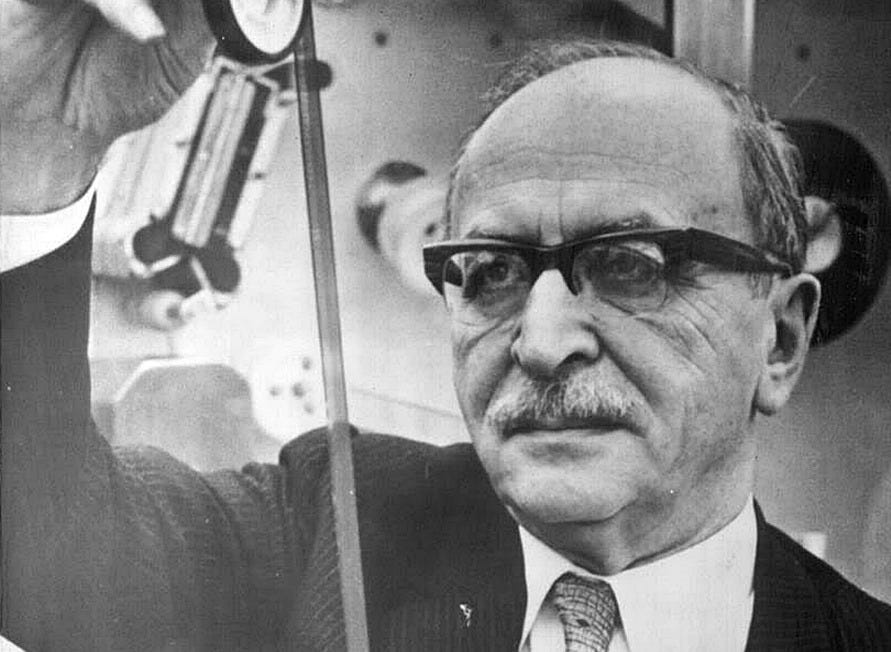
Easter Sunday, 1947. At a tennis club in Rugby, a Hungarian engineer is waiting for a court, unable to leave his problem at home. Dennis Gabor’s problem was the electron microscope, which stopped just short of the atoms it was built to see; push it further, and the picture became, in his own words, hopelessly blurred.
Yet as he waited in the tennis club, an idea sidled up to him.
Why not take a bad electron picture, but one which contains the whole information, and correct it by optical means?
There is something in that sentence that escapes the boundaries of physics. Here was a man who had devoted years to the pursuit of clarity, now surrendering it, accepting a flawed image so long as it preserved the whole, and placing his faith in light to restore what was lost.
By autumn, he had a name for it: a hologram, from holos, the whole, because it contained, he said, the whole information; the other half is gramma, writing, and nothing describes what he invented better than its own name. Whole-writing.
The trick is that the plate is never asked to hold an image. One beam of light ricochets off the object, gathering every contour; another travels straight to the plate. Where they cross, the plate records only the measure of their quarrel, so that, once developed, it resembles nothing so much as a grey fog. But send the clean beam back through that fog, and it bends into the shape the object’s light once had, and the thing stands up again in the air behind the glass, precisely where it is not.
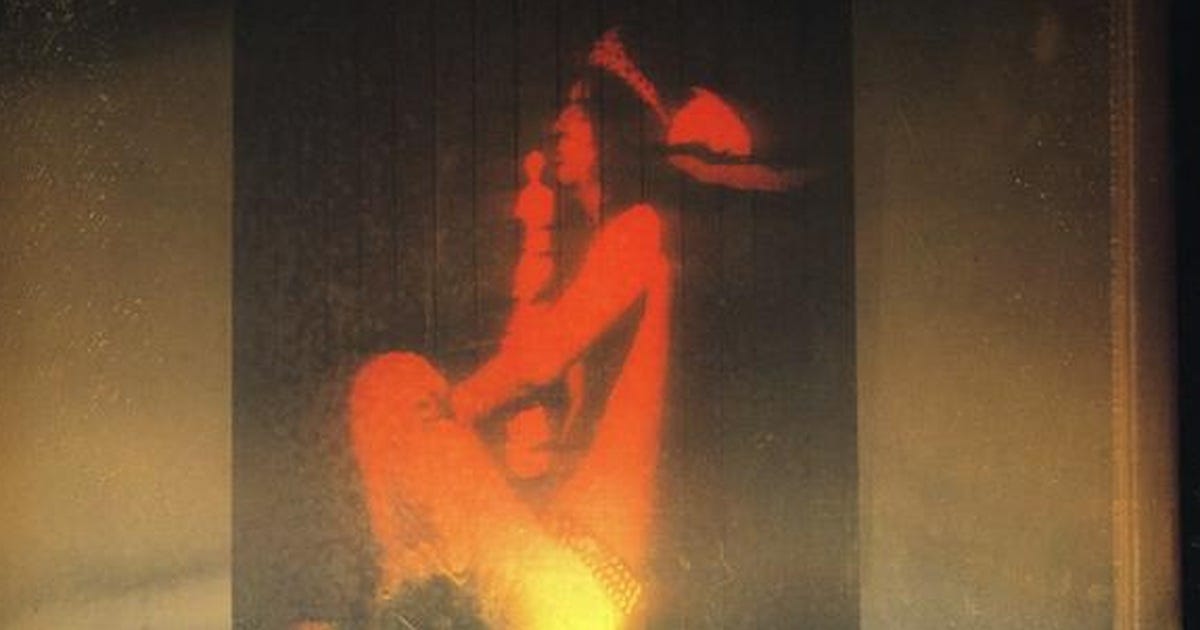
Break the plate, hold a shard to the light, and the whole scene persists inside, all of it, glimpsed through a smaller window and a touch blurrier. Every point on the plate is written by light from every point of the object, so any fragment is a fragment of everything. Tear a photograph, and you lose the hand. The plate keeps the hand everywhere, though never quite as well. That is its first kinship with a person: it does not recall where anything was, only that everything was, everywhere at once, and it pays for that in clarity.
Seventeen centuries of one sentence
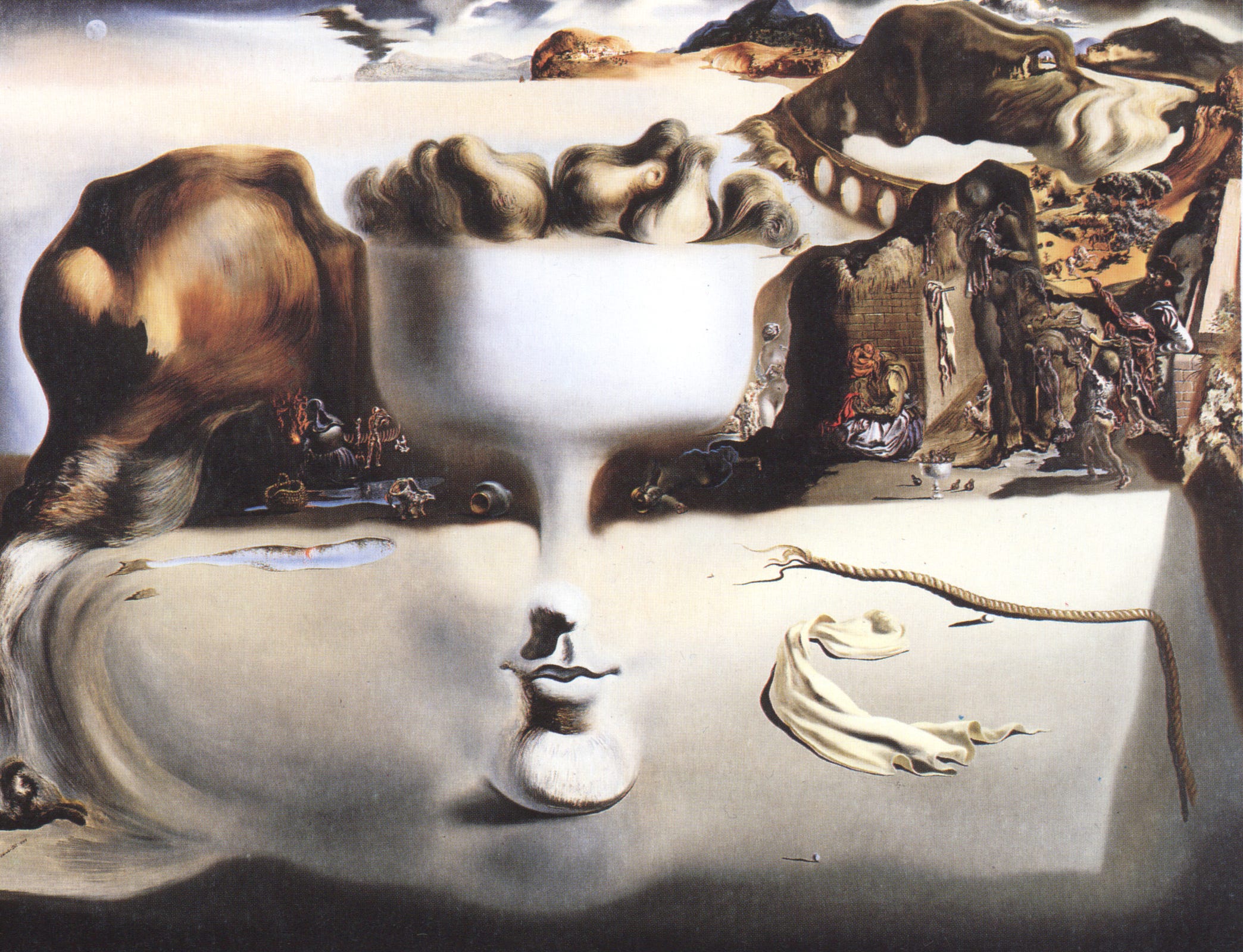
Dalí was sixty-seven when he saw one. For forty years he had been making paintings that refuse to hold still, a fruit dish on a beach that resolves into a face, a hillside that becomes a dog with an aqueduct for a collar, all of it by trickery. In April 1972, four months after the Nobel, the Knoedler gallery on Fifth Avenue opened his first exhibition of holograms.
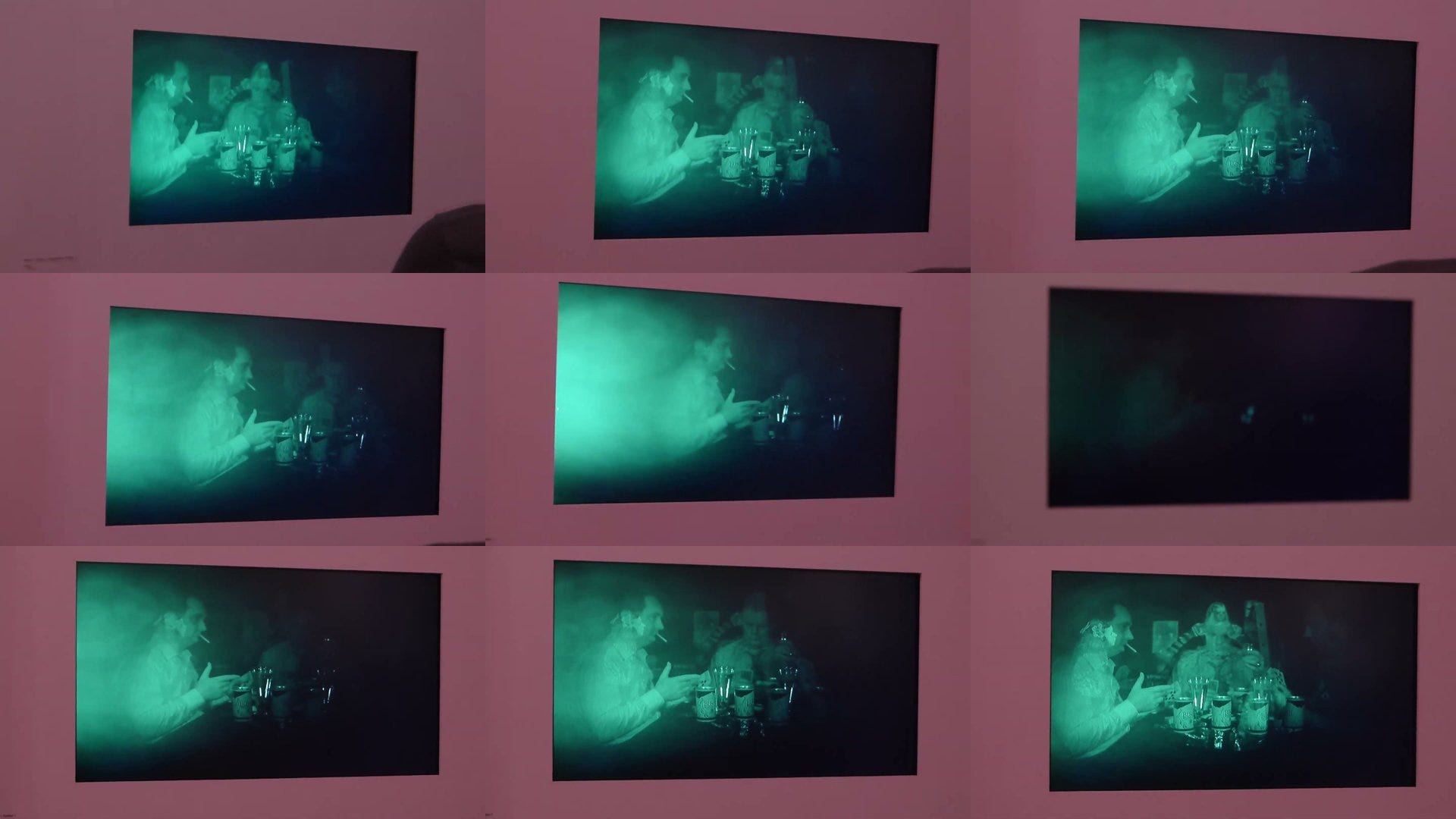
The work he called Holos! Holos! Velázquez! Gabor! still stands in Figueres and says what he understood: for his first experiment with a machine that records a scene from many places at once, he went to Las Meninas, the one painting that is already about where the viewer stands, with Velázquez inside his own picture looking out at us, beside a canvas whose back is all we are given, while a mirror on the far wall holds the king and queen, standing where we are. On one plate he set fragments of it; on the other, because he was Dalí, three men at poker.
In 1273, in the Summa, Thomas Aquinas asks whether Christ is entire under every part of the consecrated host and answers that he is, not portioned out among the fragments but whole in each; break the bread, and you have not broken what is in it, because what is in it was never in one piece of it. A thousand years earlier, Plotinus had described a place where each thing contains all within itself and sees all in every other.
For seventeen centuries the idea lived in the mouths of people who believed it and could not set it on a table, until an engineer did, in a shed in Rugby, with the lights off. And what they had been trying to say, all that time, was something about people: that whatever has mattered to anyone was never kept in one place, and so could never be torn out.
Break the plate. Nothing is lost, and everything is kept whole in a blurry mystery.
Where the body keeps it
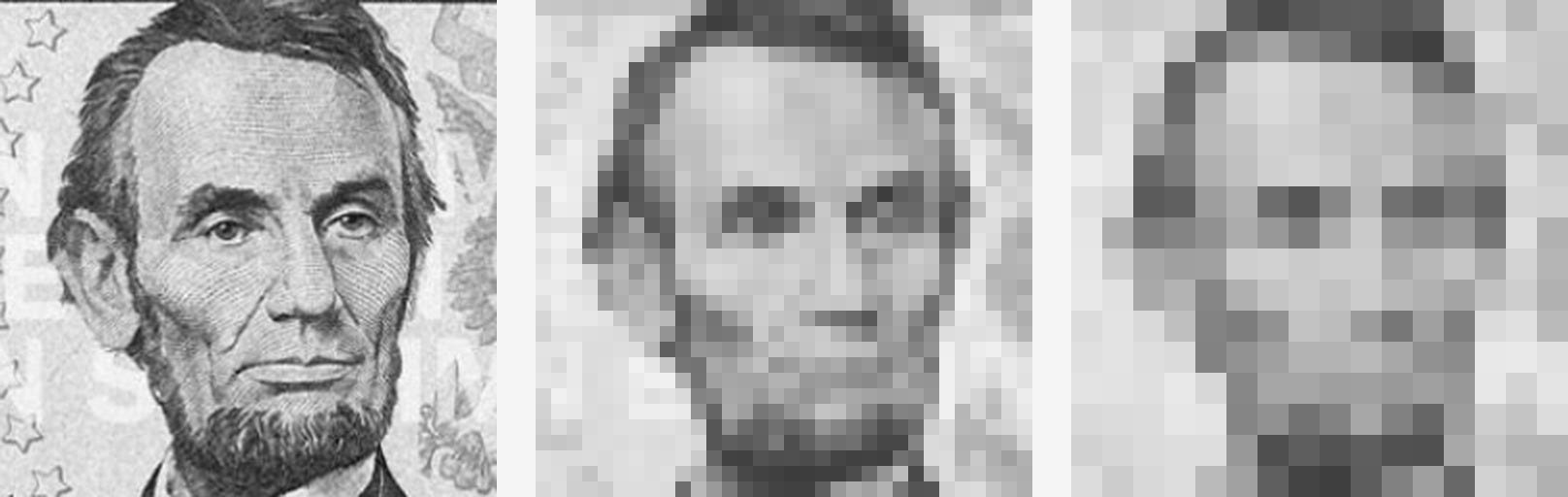
In 1973, while Dalí was still in love with his holograms, Leon Harmon of Bell Labs asked how little a face needs to stay a face, took Abraham Lincoln from a five-dollar bill, dissolved him into a grid of greys and made the squares larger and fewer until almost nothing was left, and still the face would not leave. A few years later, that Lincoln of squares appeared in the corner of one of Dalí’s canvases.
A grid, though, is a fragile way of keeping an image. Each square knows one thing in one place, and if you tear it out, that piece of the face goes with it; a genome is written much the same way, one address at a time, which is why a flatworm is so hard to explain. Cut a planarian up, and it grows back; in 1898 Thomas Hunt Morgan watched a fragment he put at a two hundred and seventy-ninth of the animal become a whole worm, only smaller, as if every piece carried the drawing of the whole and no one could say where it was kept. A century later, Michael Levin’s laboratory at Tufts silenced the electrical conversation between the cells of a freshly cut worm for three days, and the fragments grew back with a head at each end, some of them keeping a second head in reserve for years; through all of it the genome was never touched. Levin reads it as a body plan held in the tissue’s electrical state, and if he is right, the worm keeps its shape the way the plate keeps the scene, in every piece, entire.
We have asked the brain the same question for longer. Karl Lashley spent thirty years searching for the place where the memory lived. In 1950 he admitted, in a sentence that reads like surrender, that it is not possible to demonstrate the isolated localisation of a memory trace anywhere within the nervous system. The more cortex removed, the worse the memory and where it was removed from hardly mattered: not a memory lost but a memory blurred, and the smaller the window left, the blurrier it grew. Lashley had found what Gabor found on the plate. You may keep a thing in one single place and have it sharp, or keep it everywhere and have it blurred, and nothing alive has ever managed both.
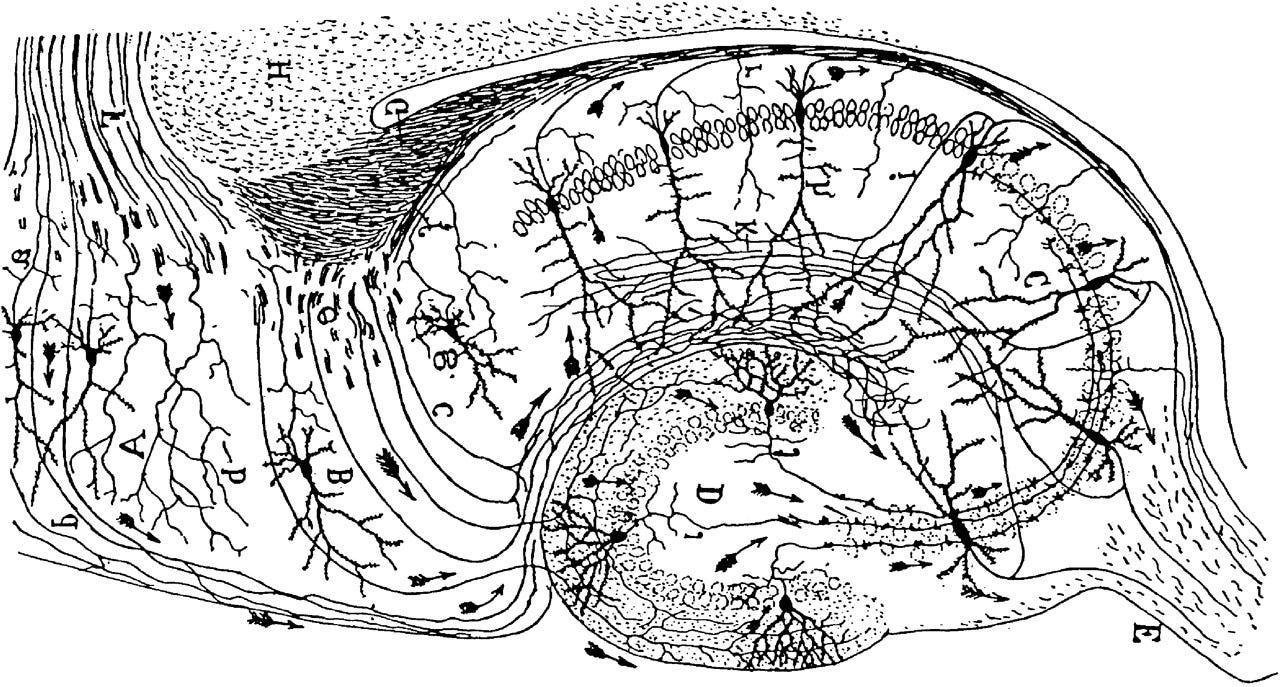
The question is being asked again now, not with a scalpel but with equations. In 2023, Marco Cavaglià and Jack Tuszynski proposed that the membrane of a neuron might do what Gabor’s plate does, recording not a signal in a place but the disagreement between signals. Three years later, Cavaglià, Tuszynski, and Tommaso Firaux gave the idea a name, active interference, and argued that what a brain is made of is not incidental to how it thinks. In the model, the membrane is coupled to the water that wets it and to the electric fields of the body, and information is not carried from place to place but takes shape where it is. The brain, on this view, holds no picture of the world, any more than the plate holds a picture of the object; it holds the quarrel, and the picture stands up only when it is read. To anticipate the world, a living thing needs no model of it, only rhythms of its own that run faster than the world’s. It is a hypothesis, so far explored only in simulation, and the paper treats it as one: it says what would have to be true in living tissue for the idea to hold, and what would sink it. A plate means nothing until it is developed; this one is still in the dark room, and the authors are building the light to read it by.
The self you cannot sharpen
Gabor sought to escape the blur on the tennis court, but it remained with him; what he returned with was the cost of preserving everything, and the century since has been discovering how deeply that cost is embedded: it reaches all the way to the self.
Recall someone you have not seen in twenty years, someone who mattered for a season and then faded from the room. You would recognise them instantly across a street; you remember the subtle play of their face before laughter, the side where the smile first appears, the way they stood in a doorway. Yet you cannot see them clearly. Nothing remains still long enough to be described, and the more intently you search, the less you find, for you have not lost them; you have kept them in the only way a living being can keep anything: whole in every part, sharp in none.
Now turn the plate upon yourself. There is no cell, no year, no room where you are kept; the self is not inscribed at a single address, but everywhere, in the way you hold a cup, the side of the bed you choose, the word you reach for in fear. This is why the loss of a language, a city, a decade, or a person has never truly erased anyone. It only blurs them. Every part of you still bears the whole of you, glimpsed through a smaller window, and those who have departed are carried in the same way in every part, so no fragment of you too is small to be without them. This is the price Gabor paid on the plate. You will never see yourself with perfect clarity, nor will anyone who loves you.
That blur is easily mistaken for forgetting, or for being no one in particular. In truth, it is the opposite. It is the evidence that all of you remains, unbreakable because it was never confined to a single place, and the only task left is to look, regardless.
it’s art is free: one essay a week, when something is worth saying.
If you know someone who cannot picture a face they love, send them this.
Lovely, fun and enjoyable essay to read. You have illustrated how art and science are naturally unified.
Marvelous article! Physics, neuroscience, art and philosophy: a beautiful dialogue of different disciplines with beautiful writing. Thanks so much! Reaching into our personal sense of self, and memory dynamics. Thanks! I will ponder on it.