



The thirst
It happens to all of us. We say we are going to see a painting, and every word we use comes from the eye: to see, to look, to view. Then we stand in front of the work of art, and what happens to us has almost nothing to do with looking. Something goes down.
Take the Seated Male Nude by Egon Schiele, painted in 1910. The ribs and the pelvis push up through ochre skin streaked with green, and the only pure red in the picture is kept for the eye, the nipples, the navel and the sex, as if the body had been peeled and painted again from inside. The hands and the feet are cut off. The title says seated, and there is no chair and no floor: the body hangs in an empty ground, with nothing under it, nothing behind it, and nothing between it and us.
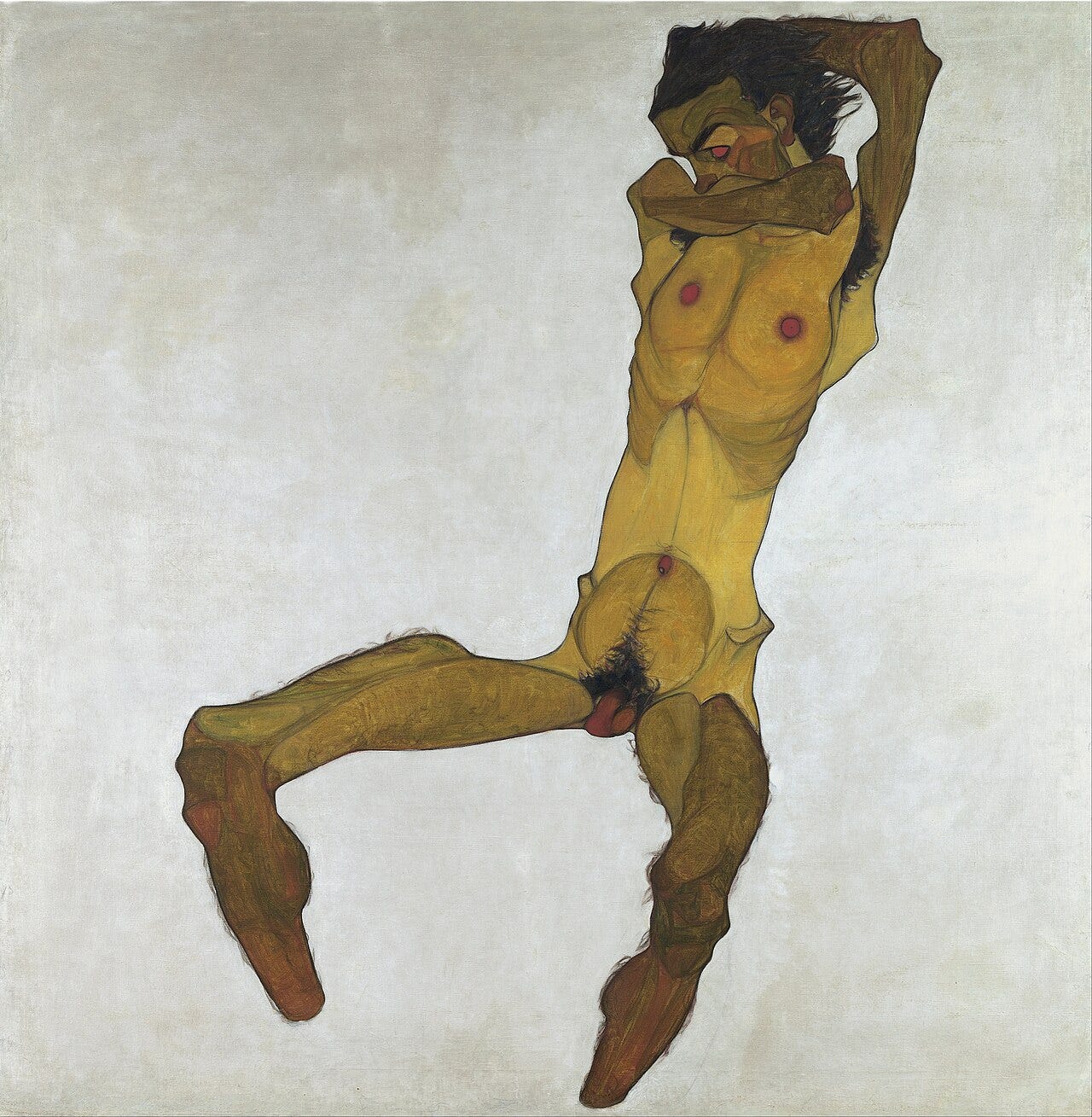
No one in front of that canvas is learning about Vienna in 1910. In fifteen seconds, through the eyes, we take in an anxiety that took a continent four more years to reach and another hundred to name.
We did not study it; we swallowed it.
So how does a period, shapeless and outliving everyone inside it, get into an object the size of a door, and then out of it and into us, in our coats, in fifteen seconds? And what does that make art?
We say we go to look at art. What we do is drink a whole century and call it looking.
Everything is still in solution.
The difficulty is that the age we want explained was never available to the people inside it, who had no more access to it than we have to ours.
A period is a liquid. All of us stand in it up to the neck, unable to see it because there is nothing to see it against, and it becomes visible only when something comes out of it and hardens. The chemistry belongs to a Welsh critic writing about film in 1954. Raymond Williams noticed that we examine each element of a past period as a precipitate, while in the living experience of the time every element was in solution, an inseparable part of a complex whole, and he called the thing still in solution a structure of feeling. Seven years later he added that it is as firm as the word structure suggests and yet works in the least tangible parts of what we do.
Art is where it hardens first, not because the painter is wiser than the rest of us, but because art is the only instrument not obliged to know what it is measuring. Politics must name an event before it can act on it, journalism before it can print it, philosophy before it can think it. A painter can put down a wrong green, or a silence in the wrong corner, explain neither to us, and still be right.
We have no word yet for what a painter does without meaning to, so we will borrow one from the man who spent his life reading what pictures mean. In 1939 Erwin Panofsky described the deepest layer of a picture’s meaning as the basic attitude of a nation, a period, a class or a persuasion, unconsciously qualified by one personality and condensed into one work. Condensed, and unconsciously. Panofsky, who gave us the method for decoding every detail, ended by telling us that the most important one got there without our permission.
Hegel saw the price of this in 1820 and was honest about it. When philosophy paints its grey in grey, a shape of life has already grown old, and the owl of Minerva flies only at dusk. Which makes this essay an owl. Everything we are about to understand here was over before we started, and the paintings got to it first, because art registers early, before there is anything there to understand.
The same hand
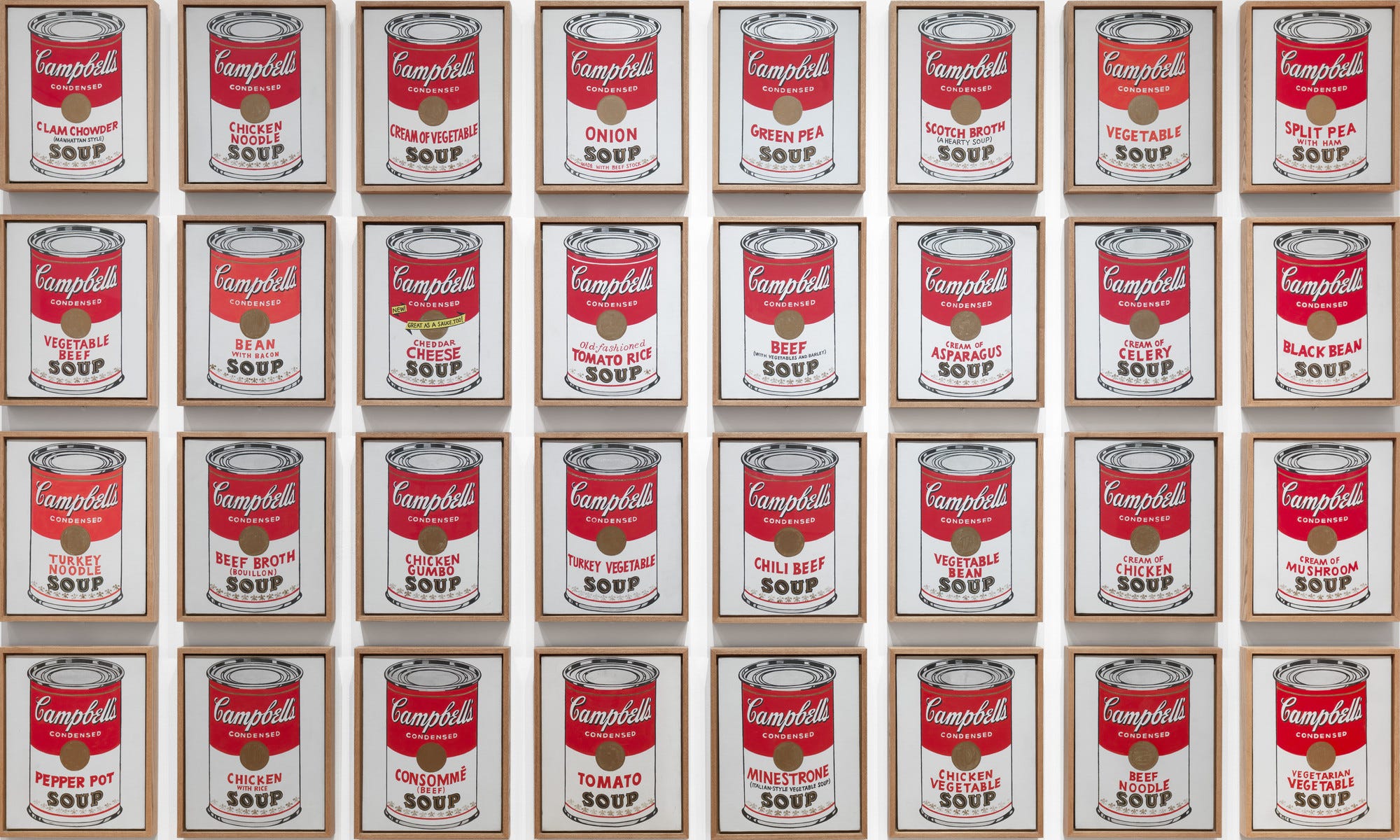
So the owl flies back to an age we all think we know because we have seen it so often on a tote bag. In July 1962, at the Ferus Gallery in Los Angeles, a commercial illustrator from Pittsburgh showed thirty-two canvases of Campbell’s soup, one for each variety the company sold, standing along a narrow shelf like groceries. Andy Warhol had painted every can by hand. In ARTnews a year later, asked why soup, he answered: “Because I used to drink it. I used to have the same lunch every day, for twenty years.” Drink is the exact word: by his own account he had been taking the age in at lunch, a tin at a time, long before he painted one.
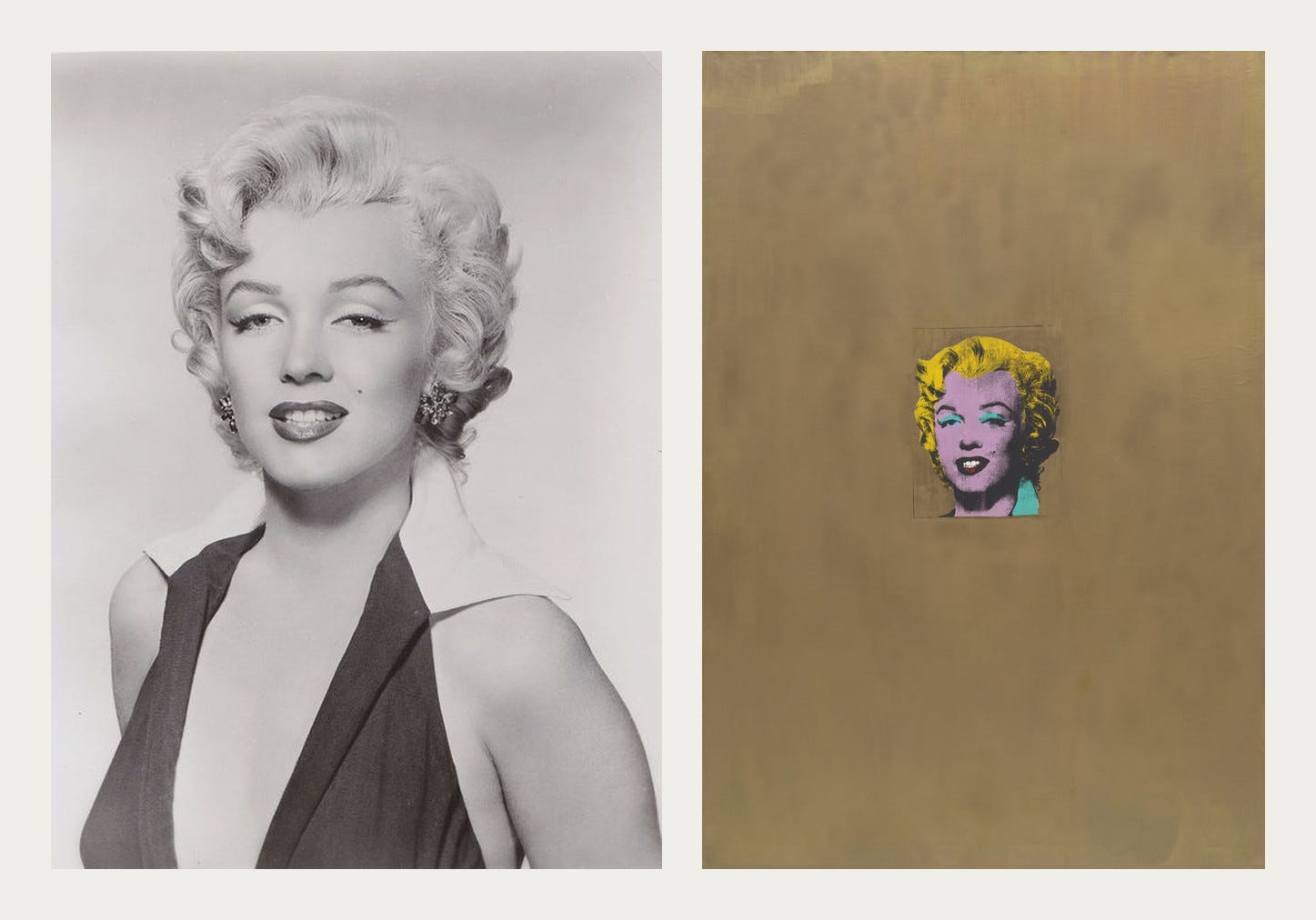
The same hand, that same year, copied a tabloid front page that blared 129 DIE IN JET. Most of the dead were art patrons flying home to Atlanta from a museum tour of Europe. When Marilyn Monroe died in August, he began to print her face from a publicity still, over and over, in rows. Car crashes followed, then electric chairs, then a tin of tuna that had killed two women from Detroit. He understood what he had been painting only afterwards: “I realised that everything I was doing must have been Death.”
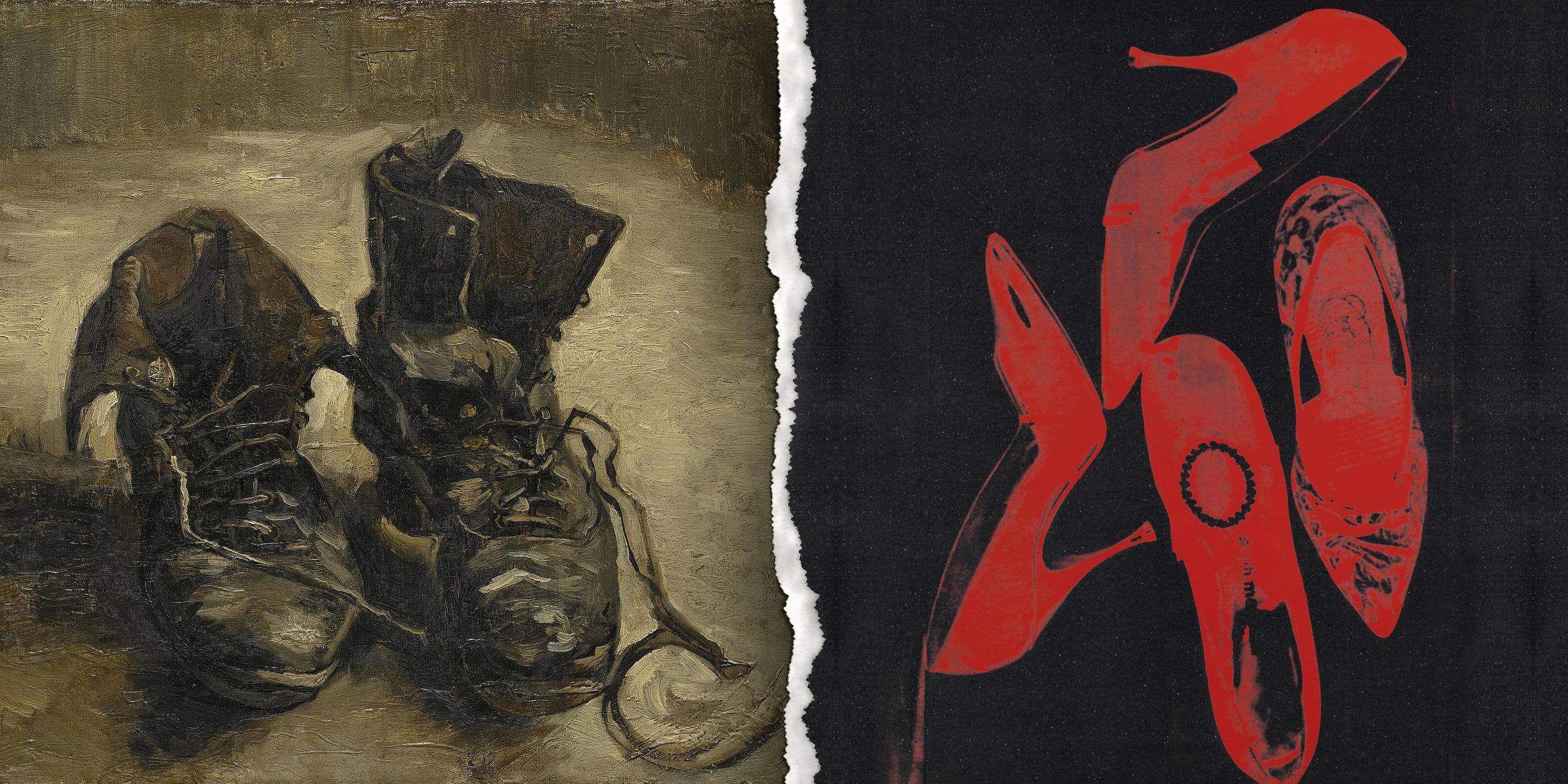
In 1984 Fredric Jameson, a critic who read novels and buildings as symptoms of their age, set Warhol’s shoes beside Van Gogh’s peasant shoes. In Van Gogh’s he could still rebuild a whole world of field work and poverty; in Warhol’s Diamond Dust Shoes, whose diamond dust is powdered glass, he found “a new kind of flatness or depthlessness”. Then he admitted what bothered him: the soup cans and the Coca-Cola bottles “ought to be powerful and critical political statements. If they are not that, then one would surely want to know why.”
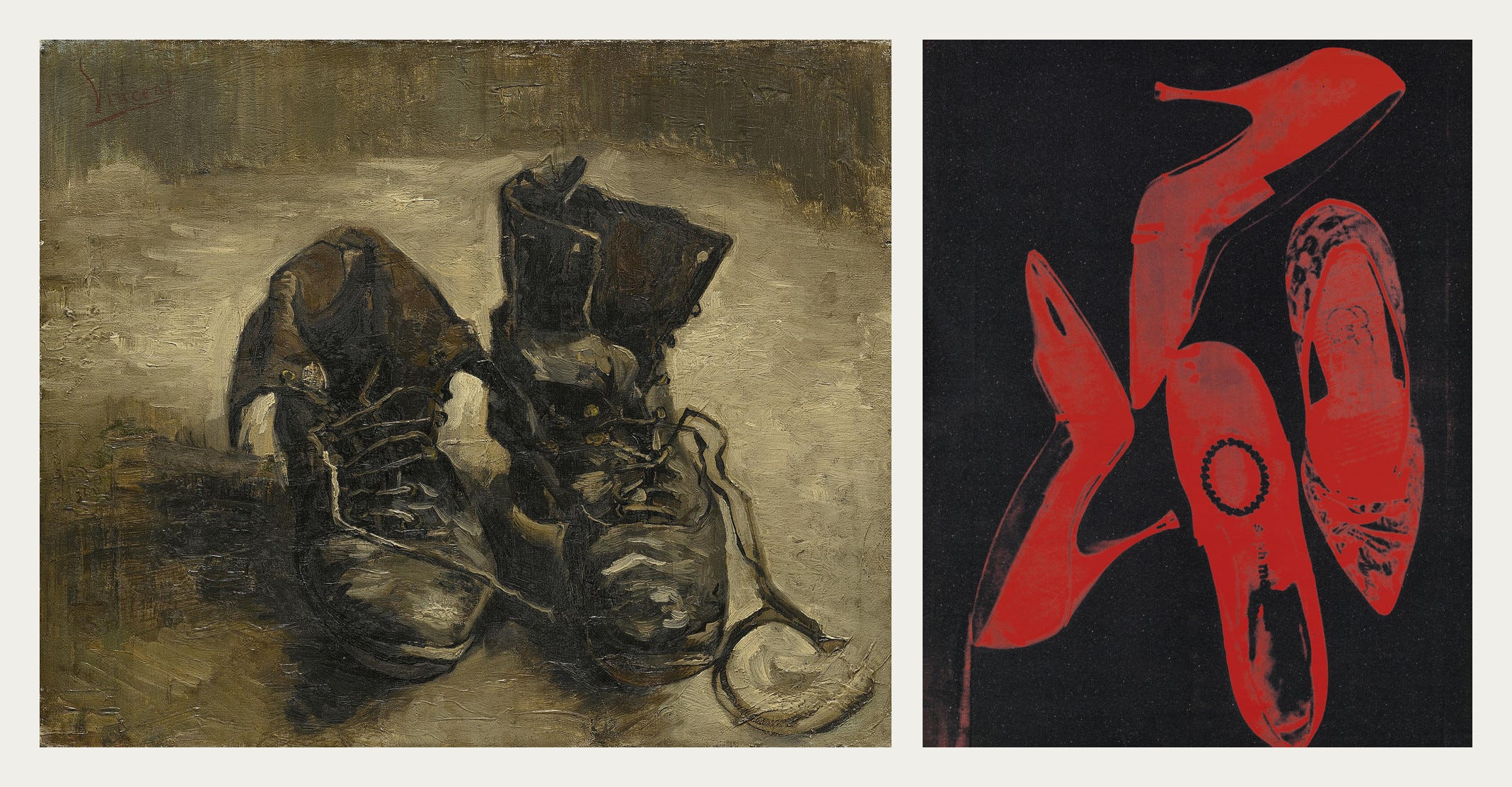
A statement needs a speaker who knows what it says, and Warhol had asked to be something else: “I want to be a machine.” His grid is in our hands now. We move it with one thumb, a trainer, a flood, a lipstick, a war, all at the same size, and now the habit has found its word: doomscrolling. He had already told us in 1963 what it does after a while: “when you see a gruesome picture over and over again, it doesn’t really have any effect.”
The century came out of him twice in one year, as soup and as the dead. He was not its author. He was the place where it came to the surface.
Shelley had the word for this in 1821, in a defence of poetry that no one printed until he had been dead eighteen years. Poets, he wrote, are “the mirrors of the gigantic shadows which futurity casts upon the present; the words which express what they understand not”. They are the words themselves, which carry a meaning they will never be told.
The maker is the glass, and the glass never tastes what it holds.
Mnemosyne
In Hamburg, from 1924 until his death in 1929, Aby Warburg covered wooden panels with black hessian and pinned photographs to them, Greek reliefs beside Renaissance paintings beside postcards and advertisements, so that we could watch the same gesture come back across three thousand years. He called those returning gestures Pathosformeln, formulas of pathos: feeling condensed into a gesture. His doctoral dissertation, finished in 1893, had been on Botticelli, on the Birth of Venus and the Primavera, and what he noticed first was the hair and the drapery, the parts of the picture the wind moves.
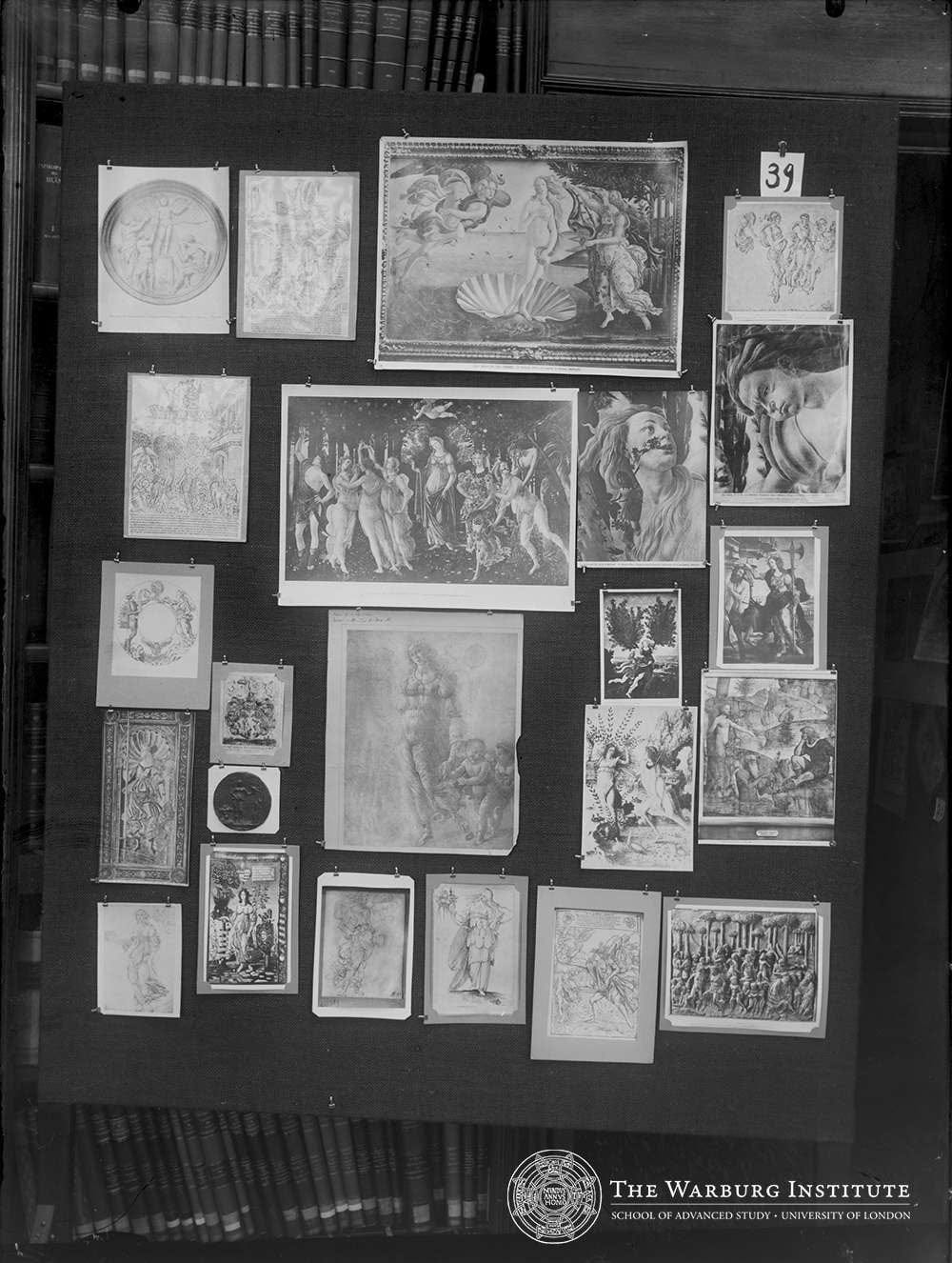
Above the entrance to his library he had one word put up, in Greek letters: Mnemosyne. The Greeks made Memory, and not knowledge, the mother of the Muses. Some Greeks went into the grave with a leaf of gold that told the soul what to say among the dead: that it was parched with thirst, and wanted the cold water of Memory. Memory keeps what it does not understand and gives it back when it chooses, to whoever happens to be standing there.
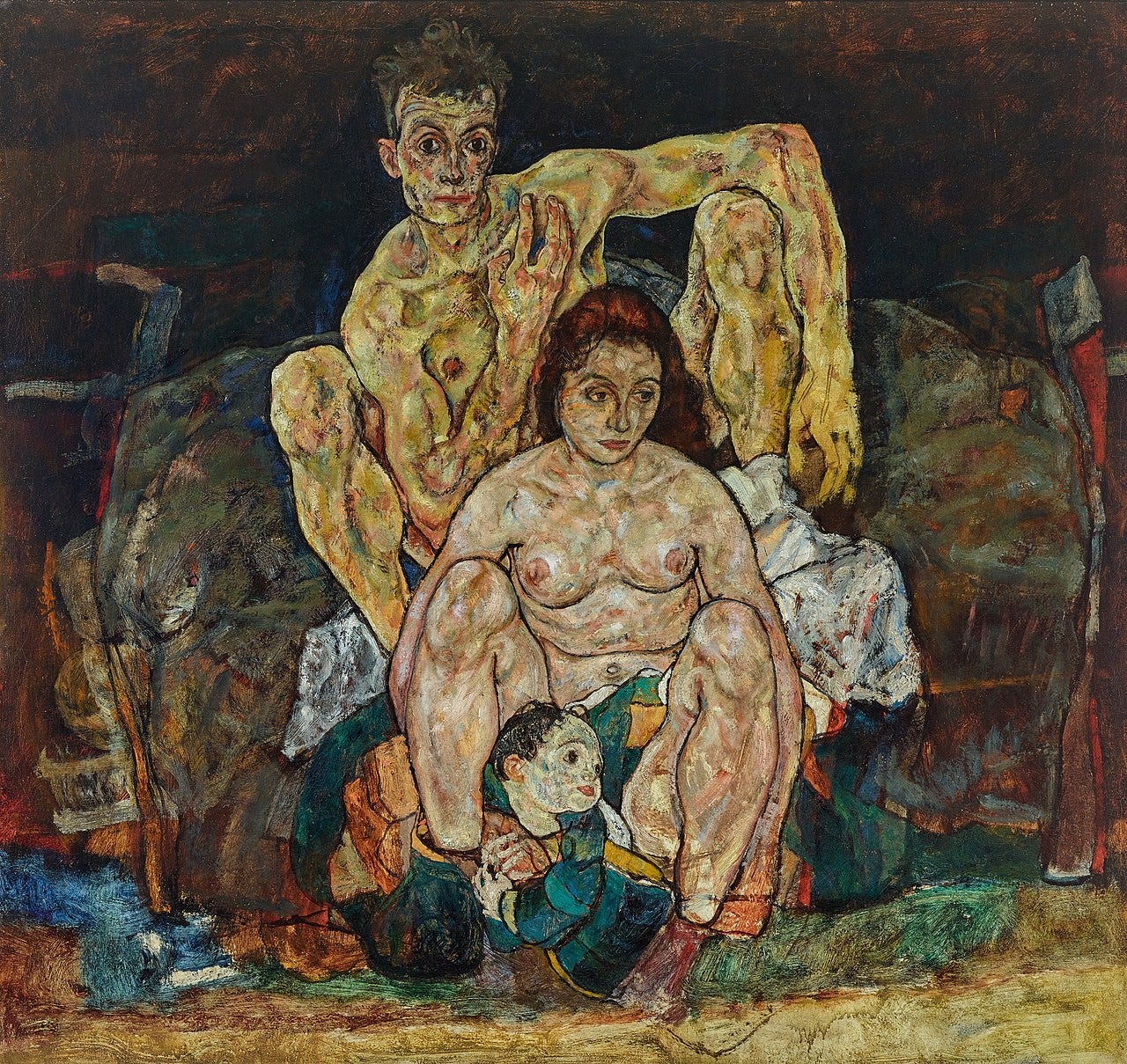
Perhaps that is all art is: a memory the world makes before it has anything to remember, placed in the hands of someone who will not live to learn what was entrusted to them. The influenza took Schiele on 31 October 1918, at twenty-eight, three days after it took his wife, who was six months pregnant, and the body he had hung over nothing in 1910, his own, went on waiting for its century without him.
So we are the last vessel in a long chain. The age poured itself into a painter who could not taste it, the painter poured it into a surface that could not understand it, and it has been waiting there, patient as water in a well, for someone to stand still long enough to drink.
Do not photograph it; a photograph copies the glass and leaves the wine behind. Do not explain it; the one who made it could not. Stand there, in our coats, until whatever was poured into that surface a hundred years ago finds its way down, and then go out into the street carrying something no one has named yet. Somewhere tonight, in a room none of us will ever see, someone is already pouring the next one, and cannot taste it either.
it’s art is free: one essay a week, when something is worth saying.
If this kept you company:

The essay as an owl is an interesting image, Vittorio. Your point about everything being over before it started, reminded me of an idea of Nietzsche’s. He said that what we can find words for is already dead in our hearts. It’s a frightening idea for a writer who thinks that words can breathe life into experiences. But his line definitely captures an aspect of what you’re getting at in this piece.
This essay is profound, not a word I toss about with blithe abandon.